
We often treat wealth as a distant spectator sport. We watch markets move, listen to experts explain complex terms, and hope our long-term bets pay off decades from now. This passive relationship with money leaves many feeling disconnected from their own financial potential. The platforms we’re examining reject that model.
They replace the waiting with doing, transforming financial planning from a forecast you receive into a skill you practice. Each one creates a direct, personal feedback loop, turning abstract concepts like ‘sustainable growth’ into a series of tangible actions you can take today, tailored to the specific financial life you actually lead.
The New Building Blocks of Wealth
The architecture of modern wealth rests on a foundation of consistent, small-scale actions rather than any single large-scale decision. Contemporary financial tools are designed to lock these actions into your daily patterns.
Certain platforms handle the mechanics for you, moving small amounts into savings or investments without requiring your daily attention. Others reframe financial education, attaching a direct and immediate reward to the process of learning. A different category offers a sandbox for testing investment ideas, providing a space for trial and error that carries no financial risk.
Another type consolidates your entire financial picture, transforming data from multiple accounts into a coherent overview. Each platform featured next represents one of these core approaches, providing a specific entry point for your own construction process.
Finelo: The Practice Field for Your Investment Ideas
Finelo.com gives you a live financial market to play with, where your mistakes don’t cost you anything but your pride. It’s for people who learn by doing, who need to press buttons and see what happens to really get how things work. You can try out different moves and watch the outcomes unfold in a space that feels real but has training wheels firmly attached.
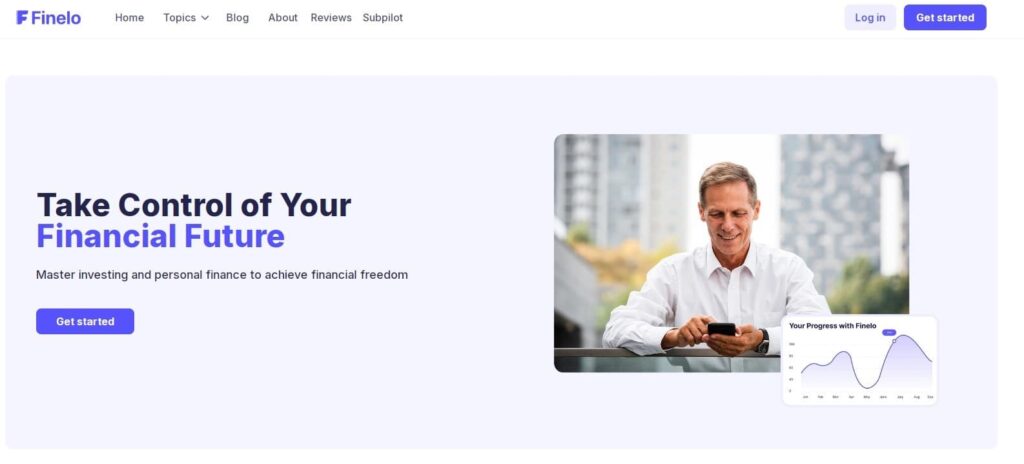
The Personal Challenge: Your main job here is to get your hands dirty with over 120 different assets. You use the same charts and data that professionals see, making choices and immediately discovering their consequences. This process pulls complex ideas down to earth, making them something you can work with directly.
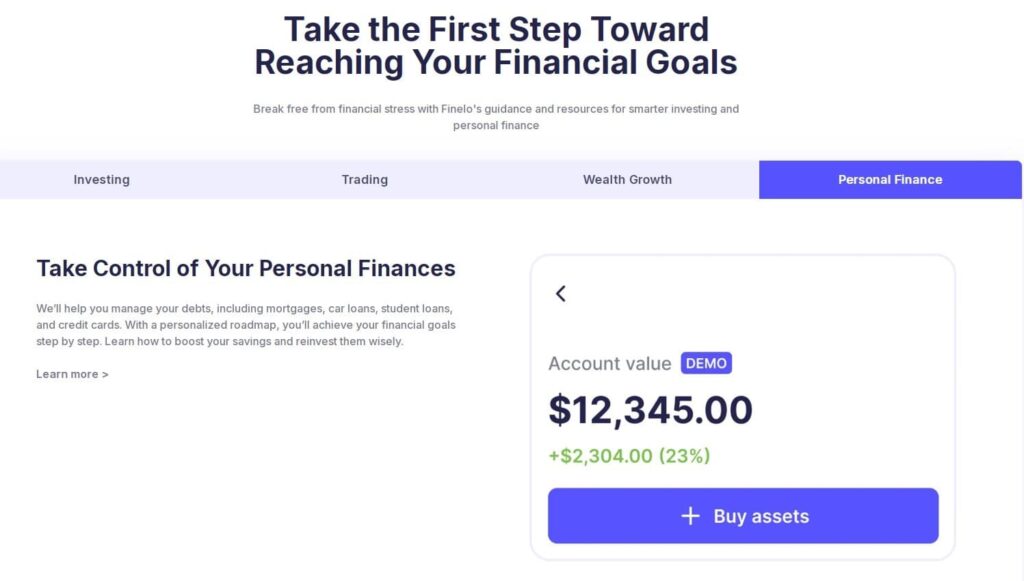
Key Features: Everything centers on the real-time market simulator that uses live data. You also get a learning plan that shifts its focus as you improve, plus an AI mentor that pops up with answers when you hit a wall.
The whole thing is backed by a massive library with more than 150 hours of material, walking you through everything from your first stock purchase to the details of cryptocurrency.
Zogo: Turning Financial Literacy into a Rewarding Habit
Zogo fixes the “why should I bother?” issue with financial learning by directly paying you for your time. It chops down big, intimidating money topics into little pieces you can finish in a few minutes, so it never feels like a heavy lift.
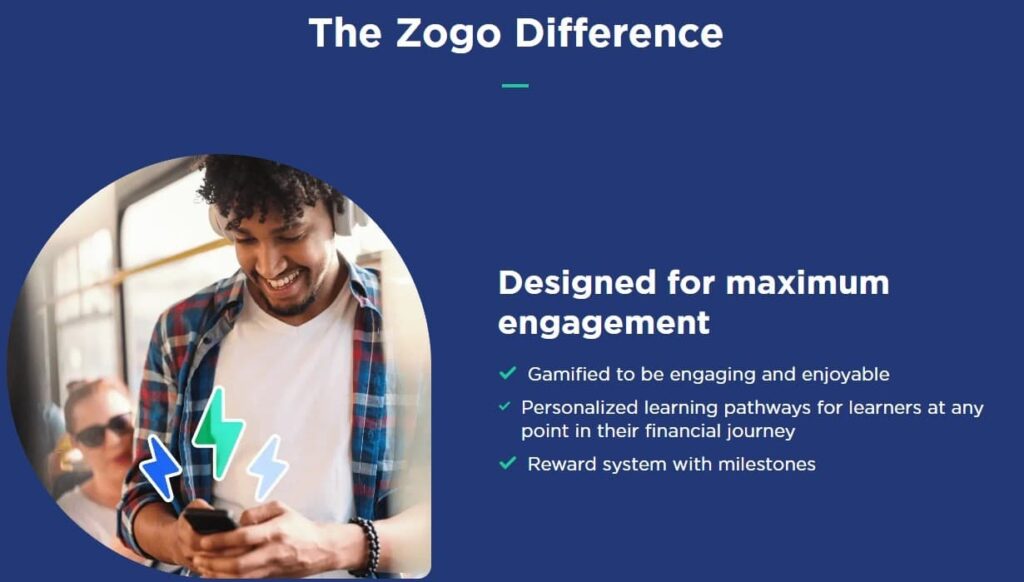
The Personal Challenge: What you need to do is straightforward: open the app, complete a short lesson, and collect your Pineapple Points. It turns the process of understanding your finances into a simple trade: your focus for an immediate reward.
Key Features: Zogo’s model is built on its extensive library of short, focused educational modules. Its partnerships with financial institutions are what power the reward system, allowing you to redeem points for gift cards to retailers like Starbucks and Target.
Coursera: The Academic Rigor Challenge
Coursera connects you directly to the lecture halls of major universities without the campus visit. It provides certified courses and multi-part specializations for people who want a deep, serious education in finance, the kind that makes your resume look more impressive.
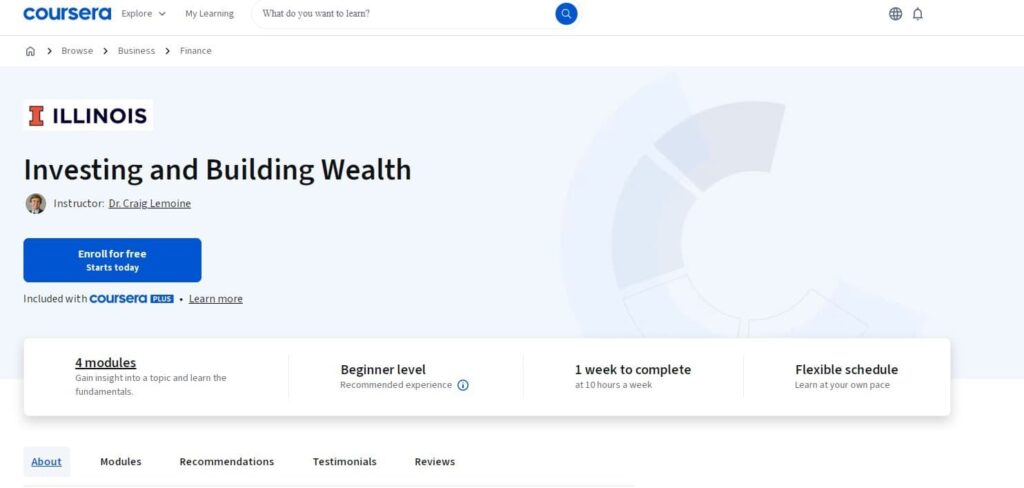
The Personal Challenge: Your task is to dive into a full university-level program and see it through to the end. You might take on a specialization like the University of Oxford’s “The Intersection of Finance, Strategy, and Sustainability,” which ends with a capstone project tackling a real business problem. Or you could study Erasmus University Rotterdam’s “Principles of Sustainable Finance” to learn how money can be used to build a better economy.
Key Features: The platform’s main draw is its collection of content picked and presented by its partner schools. It gives you a clear track to follow, from a single class to a complete specialization, and ends with a professional certificate you can post on your LinkedIn. The material heavily explores how sustainability and ESG principles are changing the world of business and finance.
Udemy: The Skill-Specific Sprint Challenge
Udemy is like a massive digital bazaar filled with courses on hyper-specific skills. It’s the spot for grabbing a precise piece of knowledge without a big time or money investment, with lessons made by people who actually work in the field.
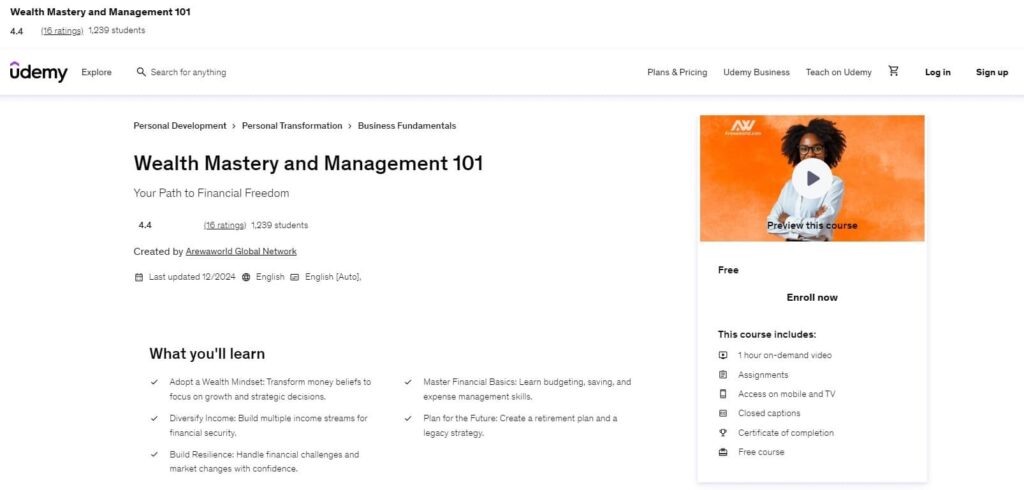
The Personal Challenge: Your mission is a focused “skill sprint.” You pick a well-reviewed course on a single topic and power through it in a short, intense burst. You might choose “ESG and Sustainable Investing 365” to get a grip on environmental and social factors using the CFA Institute’s findings.
Another option is the “Comprehensive Wealth and Portfolio Management” bundle, which walks you from financial basics all the way to retirement. There’s also “Keys to Success: The Path to Creating Sustainable Wealth,” a course that pushes you to build value in five areas of life, like your community and personal well-being, beyond just your bank account.
Key Features: Udemy’s model offers a huge volume of courses on niche topics, often available at a low cost. While it provides certificates of completion, they are not formally accredited like some Coursera offerings. The platform’s strength is its accessibility and the immediate applicability of its course content.
Wealthfront: The Long-Game Strategy for Automated Investing
Wealthfront is for people planting trees they may never sit under, focusing on steady growth years down the line. It works as a sophisticated autopilot for your money, using complex algorithms to handle a mixed investment portfolio, always looking for tax advantages and consistent growth.
The Personal Challenge: Your main role is to set your financial destination and your comfort with bumps in the road, then let the system handle the driving. The platform asks you to keep your eyes on the horizon, using its retirement planning and future forecasting tools to help you avoid short-term distractions.
Key Features: What you get with Wealthfront is a system that automatically performs tax-loss harvesting to keep more of your money, a cash account that pays a strong interest rate, and a collection of planning tools. It handles over $80 billion for more than a million people by offering a clean, automated investment process driven by data.
Conclusion: Finding Your Financial Fit
Your choice here comes down to the kind of effort that feels less like work to you. If you need to touch and see financial cause and effect, Finelo’s simulator builds that understanding through direct interaction. When you require a concrete payoff for your time, Zogo’s learn-to-earn model turns education into a transaction.
For those who want deep, structured knowledge, Coursera offers a formal academic path, while Udemy provides the flexibility for a targeted skill sprint. And if your preference is for a fully automated engine handling the details, Wealthfront manages the ongoing work of portfolio growth.
The most effective results happen when a platform’s specific function connects with your individual hurdle. Lasting wealth accumulates through methods that integrate smoothly into your existing habits, making financial progress a regular part of your life instead of a separate, difficult task.